
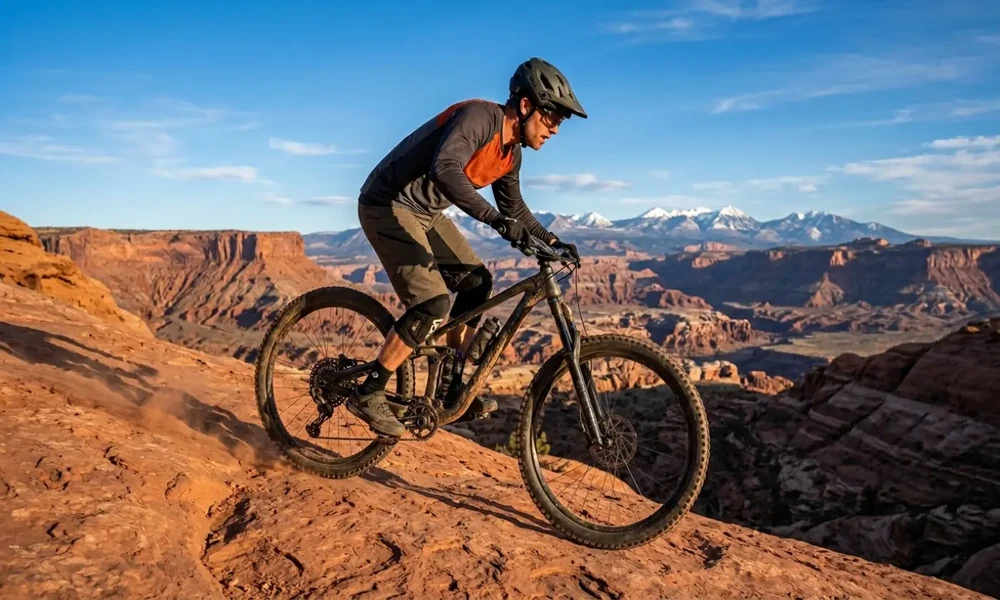
Most people quit mountain biking after one ride, and it isn’t the climbing that does it. It’s showing up on a borrowed bike with no idea which trail matches their skill, then spending two hours walking it.
I know because I did exactly that. First ride, wrong trail, wrong tire pressure, wrong everything.
Here’s the fix: match the trail to your actual skill level before you touch a pedal, and accept that your first season is about control, not speed. Get those two things right and the sport sticks. Local networks make this easy to practice, and places like Lakeville biking trails offer roughly five miles of beginner, intermediate, and advanced routes from a single trailhead, which means you can test your level without driving all over the state to find out.
What Gear You Actually Need (And What Can Wait)
Beginners spend money in the wrong order. They buy a hydration pack and padded shorts before they own a helmet that fits, then wonder why the ride hurts.
Helmet first. Not a skate helmet, a bike helmet with a proper fit dial. If it slides when you shake your head, it’s the wrong size and it won’t protect you in a real crash.
Second, gloves. Your hands take the worst of a fall because your instinct is to catch yourself. Twenty dollars of padding saves a week of raw palms.
Third, flat pedals with real pins, not the plastic reflectors that came on the bike. Flat pedals let you bail instantly, which matters more than efficiency when you’re learning.
What can wait? Clipless pedals, a dropper post, tubeless conversion, and the carbon anything. None of it helps a rider who hasn’t learned to shift their weight yet. If you’re feeling pressure to cover ground fast, remember that physical activity lowers stress and improves sleep according to the National Institute on Aging, and you don’t need expensive components to get either benefit.
One more thing: tire pressure. Too hard and you’ll bounce off every root. Too soft and you’ll pinch flat. Ask at a local shop what they run for your weight and the local dirt, then start there. That single adjustment changes how a trail feels more than any upgrade.
The First Ride Ladder: How to Pick a Trail That Won’t Break You
Trail ratings lie to beginners. A green circle at one park can ride harder than a blue square somewhere else, because ratings are relative to the whole system, not to you.
So I use what I call the First Ride Ladder. Four rungs, and you only move up when the rung below stops scaring you.
- Grass and gravel. Practice standing, braking with one finger, and looking where you want to go. Twenty minutes. Boring on purpose.
- Flat dirt with roots. Same skills at speed. Learn to unweight the front wheel before a root instead of gripping harder.
- Rollable features. Small dips, easy berms, gentle rock rolls. Walk them first. Always.
- Flow with consequence. Jumps, drops, steep corners. This is where you belong after a full season, not a full weekend.
The mistake is skipping rung two because it looks tame. Rung two is where your hands learn what the bike does when the ground moves. Nine out of ten beginner crashes trace back to a rider who never spent real time there.
Apply it to a place like West Lake Marion. Start on the beginner loop even if it feels beneath you. Ride it twice, then pick one intermediate segment and repeat that single stretch until it’s dull. That’s the whole progression method, and it works faster than chasing mileage.
Reading Trail Signs and Trailheads Like a Local
Trailhead signage tells you more than the difficulty rating if you know what to look for. Look for the direction arrows, because some loops run one way and meeting a rider head-on in a blind corner is how people get hurt.
Look for drainage. Trails that stay wet after rain get closed for good reason. Riding mud ruts a trail and gets bikes banned from networks entirely, which is why local land managers are strict about it.
And check the weather before you load the car. Conditions shift fast, and the National Weather Service is the source I trust over any app’s hourly guess. Wet roots and wet rock behave like ice. If it rained yesterday, give the dirt a day.
One practical note on traffic: most public trail networks see their heaviest use on weekend mornings. Ride late afternoon on a Saturday, or go early Sunday, and you’ll have sections to yourself while still having help nearby if something goes wrong.
Finally, parks with a firepit near the trailhead change the whole outing. You finish the ride, sit down, and actually talk about it instead of driving home in silence. That’s the part that turns a one-time experiment into a habit, and it’s worth choosing your trailhead around.
Skills to Practice Before You Care About Speed
Speed is a byproduct of control. Chase it first and you’ll spend your season healing.
Practice these five, in this order:
- Heavy feet, light hands. Weight in the pedals, relaxed grip. Death grip tires your arms and steers you worse.
- One-finger braking. Two fingers means you can’t hold the bar properly when it gets rough.
- Looking ahead. Your bike goes where your eyes go. Stare at the rock and you’ll hit the rock.
- Cornering on the outside pedal. Drop the outside foot, lean the bike, keep your body upright.
- Track stands in your driveway. Ten minutes a few times a week. Unglamorous, and it fixes more bad habits than any YouTube tutorial.
Give each one a dedicated session on flat ground before you take it to a real trail. Skills learned on grass transfer. Skills learned mid-crash do not.
Where the Sport Is Heading
Mountain biking isn’t a niche hobby anymore. Outdoor recreation has grown into a real economic force in the United States, and the Bureau of Labor Statistics tracks the arts, entertainment, and recreation sector as a major employer nationally. That matters to you as a rider, because growing demand is why towns keep building and maintaining trail networks instead of letting them fade.
More trails, closer to home, better maintained. That’s the trend, and it favors anyone starting now.
Your Next Step
Go ride rung one. Grass, twenty minutes, helmet on, one-finger braking. Then find a beginner loop near you and repeat it until it feels easy, because easy is the signal to move up.
Don’t buy the gear, don’t chase the fast group, and don’t measure your first season in miles. Measure it in how many times you didn’t crash.
What’s stopping you from loading the bike up this weekend?