
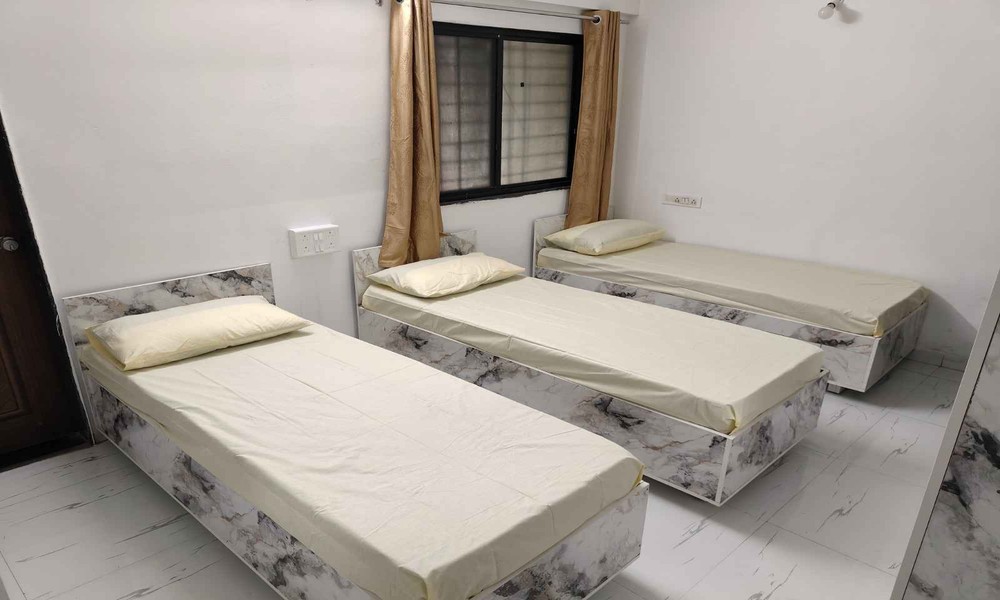
India’s urban migration map is redrawing itself. Five years ago, young professionals moved predictably: Bangalore for IT, Mumbai for finance, Delhi for government roles. Today, the decision tree has more branches. Tier-2 cities are competing aggressively, remote work has decoupled location from employment, and the traditional hunt for a room on rent in Pune or Bangalore now includes variables our parents never considered: co-working infrastructure, weekend escape proximity, and community access.
Pune in particular has become one of India’s fastest-growing relocation hubs for young professionals, thanks to its large IT parks, expanding Global Capability Centers (GCCs), relatively lower living costs compared to Mumbai, and a lifestyle balance that many professionals find less hectic than Bangalore.
This shift isn’t just about where professionals choose to work; it’s about where they choose to live, and increasingly, those aren’t the same places anymore. Here’s what’s actually influencing accommodation decisions in 2026, based on city migration trends across India’s young professional demographic.
Quick Snapshot: Where Young Professionals Are Moving in 2026
|
Trend |
What’s Changing |
Why It Matters |
|
Tier-2 city growth |
Professionals moving beyond metros |
Lower costs + remote flexibility |
|
Hub-adjacent living |
Staying near opportunity clusters |
Access without legacy rent burden |
|
Managed living rise |
Growth of serviced, all-inclusive housing |
Predictable costs + reduced friction |
|
Hybrid infrastructure demand |
Homes doubling as workplaces |
Reliable Wi-Fi & work-ready spaces are now essential |
What’s Driving the New Migration Math
The economy has changed fundamentally. A software engineer earning ₹12 lakhs annually used to default to Bangalore or Pune despite 40% of their salary going to rent and commute. Now, that same professional runs a different calculation: “Can I live in Coimbatore, work remotely 4 days a week, and fly to Bangalore monthly for ₹8,000, still spending less than a ₹35,000 Koramangala apartment?”
The answer is often yes, which explains why tier-2 cities have seen hiring growth of up to 40%, nearly double the pace observed in major metros. This signals a steady shift in where young professionals are choosing to live and work. But this isn’t wholesale abandonment of tier-1 cities. Instead, professionals are choosing proximity to opportunity hubs while avoiding legacy infrastructure costs. In Pune, this manifests as concentrated demand in Hinjawadi and Wakad, IT hub adjacency without Koregaon Park rents.
The Four-Factor Accommodation Decision Framework
Today’s professionals evaluate housing through a matrix their parents didn’t use:
1. Commute Flexibility vs. Serendipity Access
Remote workers technically can live anywhere, yet they cluster near office hubs. Why? The optionality of impromptu meetings, networking events, and weekend collaboration sessions. A professional might work from home Monday-Thursday but wants the option to be in the office in 20 minutes, not two hours.
2. Total Monthly Outflow vs. Pieced-Together Costs
The ₹12,000 1BHK looks affordable until you add ₹8,000 for meals, ₹3,000 for commute, and ₹5,000 for laundry and housekeeping. But the real shift isn’t just financial, it’s about time. Managing a traditional setup means handling cooking, groceries, cleaning, internet, and maintenance tasks that quietly add up to 15-20 hours every week. This is why demand is moving toward all-inclusive models that bundle rent, meals, housekeeping, and utilities into one system.
3. Infrastructure for Hybrid Work
Traditional PGs were built for people who spent 10 hours at the office. Today’s accommodation needs standing desks, reliable Wi-Fi (not “Wi-Fi available”), soundproof spaces for calls, and backup power. These aren’t luxury amenities; they’re professional infrastructure.
4. Community Quality Over Size
The shift from “does this place have 100 residents?” to “will I find even 5-10 people I’d actually want to spend time with?” Young professionals, especially those relocating alone, increasingly prioritize intentional communities over random cohabitation. Shared co-working spaces encourage collaboration during remote workdays, while structured activities such as professional workshops, peer networking sessions, sports events, and recreational meetups help residents connect with others navigating similar career journeys.
For a generation that values continuous learning and career mobility, living environments that enable peer learning and professional exchange are becoming as important as location or rent.
Migration today is less about settling and more about staying close to opportunity without burning out. For many young professionals, it’s about optionality: being near career hubs, networking ecosystems, and collaborative spaces while retaining the flexibility to pivot roles, employers, or work modes. The goal isn’t permanence; it’s strategic positioning, where you live becomes a basecamp for growth, not a lifelong anchor.
How Accommodation Models Have Adapted
The traditional Indian rental model, 12-month lock-in, 3-month deposit, broker fees, unfurnished spaces, evolved for a workforce that stayed put. It’s fundamentally misaligned with today’s project-based, hybrid, mobility-expectant professional class.
In response, three models have emerged:
- Traditional PG 2.0: Higher-end PGs offering private rooms, attached bathrooms, and basic meals. Still affordable (₹10,000-15,000) but with quality infrastructure.
- Managed Coliving: Premium coliving spaces such as Yukio offer fully managed accommodations, with rent, meals, housekeeping, work-ready infrastructure, and all-inclusive pricing (₹19,000- ₹ 25,000). A model gaining popularity in Pune’s tech corridors, such as Hinjawadi and Wakad, targeting professionals who value time over money.
- Flex-Stay Apartments: Short-term furnished rentals with hotel-like service but monthly pricing (₹25,000-40,000), for consultants and project-based workers.
The winner isn’t universal; it depends on your work model, budget, and whether you cook (surprisingly, the desire to cook remains the strongest predictor of 1BHK preference over coliving).
|
Model |
Monthly Cost |
Upfront Cost |
Best For |
Trade-Off |
|
Traditional PG 2.0 |
₹10k-15k |
Low |
Budget-focused professionals |
Limited services |
|
Managed Coliving |
₹19k-25k |
Moderate |
Long-stay professionals building routines |
Less customization |
|
Flex-Stay Apartments |
₹25k-40k |
Low |
Short-term consultants |
Premium pricing |
Making the Choice That Actually Fits
City migration and accommodation decisions have become sophisticated optimization problems. The professionals thriving in 2026 aren’t those who chase the “best” city or “perfect” housing; they’re the ones who align location, accommodation model, and work requirements into a coherent system that supports both productivity and lifestyle.
Before signing a lease, calculate the total monthly outflow, including hidden costs. Visit properties during evening hours when you’ll actually be there. Talk to current residents, not just property managers. And recognize that your ideal accommodation at age 24 (proximity to nightlife, roommate energy) differs from your needs at age 29 (quiet workspace, meal convenience). The rental market has evolved to offer options, make sure you’re matching them to your current reality, not your imagined lifestyle.
The Migration Mindset of a New Generation
The professionals thriving in 2026 don’t chase cities for prestige or apartments for aesthetics. They optimize for momentum. They choose locations that keep them close to opportunity, accommodation models that reduce daily friction, and environments that support focus.
Migration today isn’t about permanence. It’s about positioning yourself where growth compounds fastest, near networks, ideas, and career mobility, without exhausting your time and energy on logistics. Cities like Pune illustrate this shift clearly: professionals move there not only for jobs, but for access to expanding tech ecosystems, manageable living costs, and a lifestyle that supports both career intensity and personal balance.
In that sense, housing choices signal priorities. A generation measured by output, adaptability, and learning speed sees accommodation not as an asset to manage, but as infrastructure that supports ambition. Where you live becomes part of how you move forward.